The Poison Nut That Became Medicine
A Complete History of Nux Vomica in Homeopathy
Somewhere in the tropical forests of India, a medium-sized tree with unremarkable leaves and small greenish flowers produces a fruit the size of an orange. Inside that fruit lie seeds so bitter, so toxic, that a dose the weight of a few grains of rice can kill a grown man in minutes — his body locked in violent convulsions, his face twisted into what physicians call the risus sardonicus, the sardonic grin of strychnine death.
And yet, for over two centuries, those same seeds — diluted, shaken, and transformed through the peculiar alchemy of homeopathic preparation — have been handed to millions of people for hangovers, upset stomachs, insomnia, and bad moods. It is, by any measure, one of the strangest stories in the history of medicine.
This is the story of Strychnos nux-vomica — the poison nut that became a remedy.
Part I: The Tree
Meet the Strychnine Tree
Strychnos nux-vomica is not a tree that announces itself. Growing up to 20 meters tall in the wet deciduous forests of India, Myanmar, Sri Lanka, and Southeast Asia, it has a short thick trunk, smooth ashen bark, and glossy oval leaves arranged in tidy opposite pairs. Its flowers are small and forgettable.
But its fruit is anything but. Each hard-rinded orange berry — about the size of a clementine — conceals 3 to 8 flat, disc-shaped seeds covered in silky hairs. These seeds, known as "quaker buttons" or kuchla in Hindi, contain a cocktail of alkaloids that have fascinated, horrified, and healed humanity for millennia.
The two stars of the show:
Strychnine (C₂₁H₂₂N₂O₂) — A competitive antagonist at glycine receptors in the spinal cord. In plain language: it blocks the body's "calm down" signals. When glycine can't do its job of inhibiting motor neurons, every muscle fires at once. The result is the dramatic, arching convulsions that made strychnine the poison of choice for Agatha Christie's debut novel and a fixture in forensic medicine textbooks.
Brucine (C₂₃H₂₆N₂O₄) — Strychnine's gentler cousin, with two methoxy groups where strychnine has hydrogen. It's 10-20 times less potent but shares the same basic mechanism.
Together, these alkaloids make the raw seed one of the most dangerous natural substances on Earth. A single oral dose of 30mg of strychnine — about the amount that fits on the tip of a butter knife — is potentially fatal.
So naturally, people have been eating it medicinally for thousands of years.
Part II: Ancient Medicine's Dangerous Dance
Ayurveda: The Original Detox Protocol
Long before Samuel Hahnemann was born, Indian physicians had developed an elaborate relationship with nux-vomica. In Ayurveda, the seeds (Kupilu in Sanskrit) are classified as a visha dravya — a poisonous drug — and appear in more than 60 traditional formulations, primarily for disorders of vata dosha (the principle governing movement and nervous system function).
But here's the critical part: Ayurvedic practitioners never used the raw seed. They developed Shodhana — rigorous purification protocols involving immersion in cow's urine, cow's milk, ginger juice, or sour gruel for days, followed by prolonged boiling. Modern analytical chemistry has confirmed that these ancient protocols work: Shodhana in ginger juice reduces strychnine content by 68% and brucine by 40% (PMID: 22529660).
The purified seeds were used for nervous debility, paralysis, weakness of limbs, sexual dysfunction, dyspepsia, and rheumatism — a list of indications that would prove remarkably prescient when homeopaths rediscovered the same symptom picture centuries later.
Traditional Chinese Medicine: Ma Qian Zi
In TCM, nux-vomica goes by ma qian zi and is used for pain relief, blood circulation, digestion, and soft tissue injuries. Chinese physicians process the seeds by stir-frying them with sand — a different technique, same principle: reduce the alkaloid content to a level that heals rather than kills.
Unani Medicine
The Perso-Arabic tradition immersed the seeds in water for five days, then milk for two, followed by boiling. The processed form was used for paralysis and facial palsy.
Three continents, three medical traditions, three processing methods — all arriving independently at the same conclusion: this plant has extraordinary medicinal power, if you can survive it.
Part III: Hahnemann and the Birth of a Remedy
The Doctor Who Tested Poisons on Himself
Christian Friedrich Samuel Hahnemann (1755-1843) was, by any standard, a remarkable man. Born in Meissen, Saxony, he earned his MD from the University of Erlangen in 1779, spoke at least nine languages fluently, and became so disillusioned with the brutal medical practices of his era — bloodletting, mercury purges, arsenic tonics — that he quit medicine entirely and supported his family by translating medical texts.
It was this translation work that changed everything.
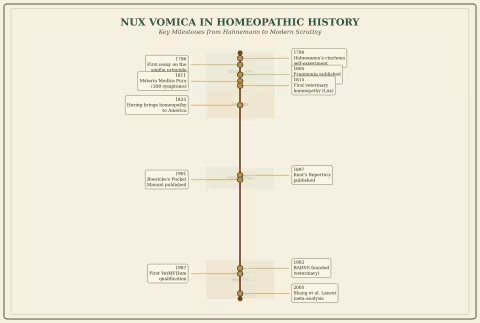
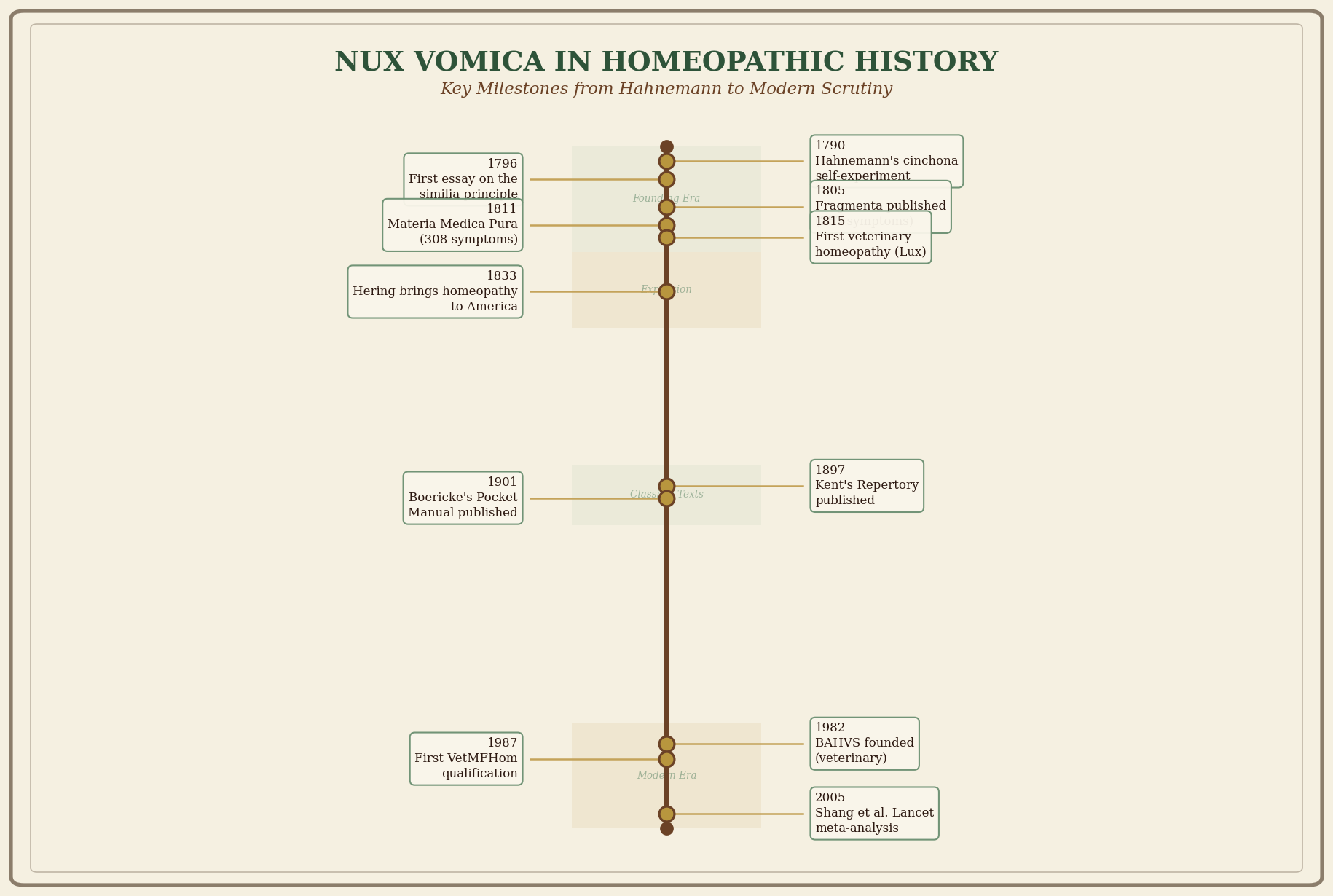
In 1790, while translating William Cullen's A Treatise on the Materia Medica from English to German, Hahnemann encountered Cullen's explanation of why cinchona bark (quinine) worked against malaria. Hahnemann found the explanation unconvincing. So he did what any reasonable 18th-century polyglot physician would do: he ate some cinchona bark himself.
To his astonishment, the bark produced symptoms strikingly similar to malaria — intermittent fever, chills, joint pain. This self-experiment planted the seed of what would become homeopathy's foundational principle: similia similibus curentur — "like cures like."
The Proving of Nux Vomica
Over the next fifteen years, Hahnemann systematically tested substance after substance on himself, his family, and willing volunteers — a process he called "proving" (Prüfung). The idea was elegant: give a substance to healthy people, carefully record every symptom it produces, and then use that substance (in diluted form) to treat patients whose illness matches those symptoms.
Nux vomica was among the most extensively tested. In 1805, Hahnemann published the Fragmenta de Viribus Medicamentorum Positivis — the first systematic record of homeopathic drug provings, written in Latin and containing 27 remedies. For nux vomica, he recorded 257 symptoms, with 51 additional symptoms drawn from documented poisoning cases. Only Pulsatilla (280 symptoms) received more attention.
Hahnemann was assisted in the nux vomica provings by Flaeming, his son Friedrich Hahnemann, and a colleague named Wahle. The symptoms they documented read like a catalog of the irritable, overworked, overstimulated modern professional:
- Irritability and anger disproportionate to the cause
- Hypersensitivity to noise, light, odors, and touch
- Nausea and vomiting, especially in the morning
- Sour, bitter belching and heartburn
- Constipation with constant, ineffectual urging
- Waking at 3 a.m. with a racing mind
- Muscle spasms and cramps
- Headaches aggravated by morning light
By 1811, when Hahnemann published the expanded proving in Materia Medica Pura, the symptom count had grown to 308 — one of the largest proving records in the entire corpus. Nux vomica wasn't just one of the original remedies. It was one of the defining remedies of homeopathy itself.
Part IV: How You Turn Poison Into Medicine (Supposedly)
The Dilution Question
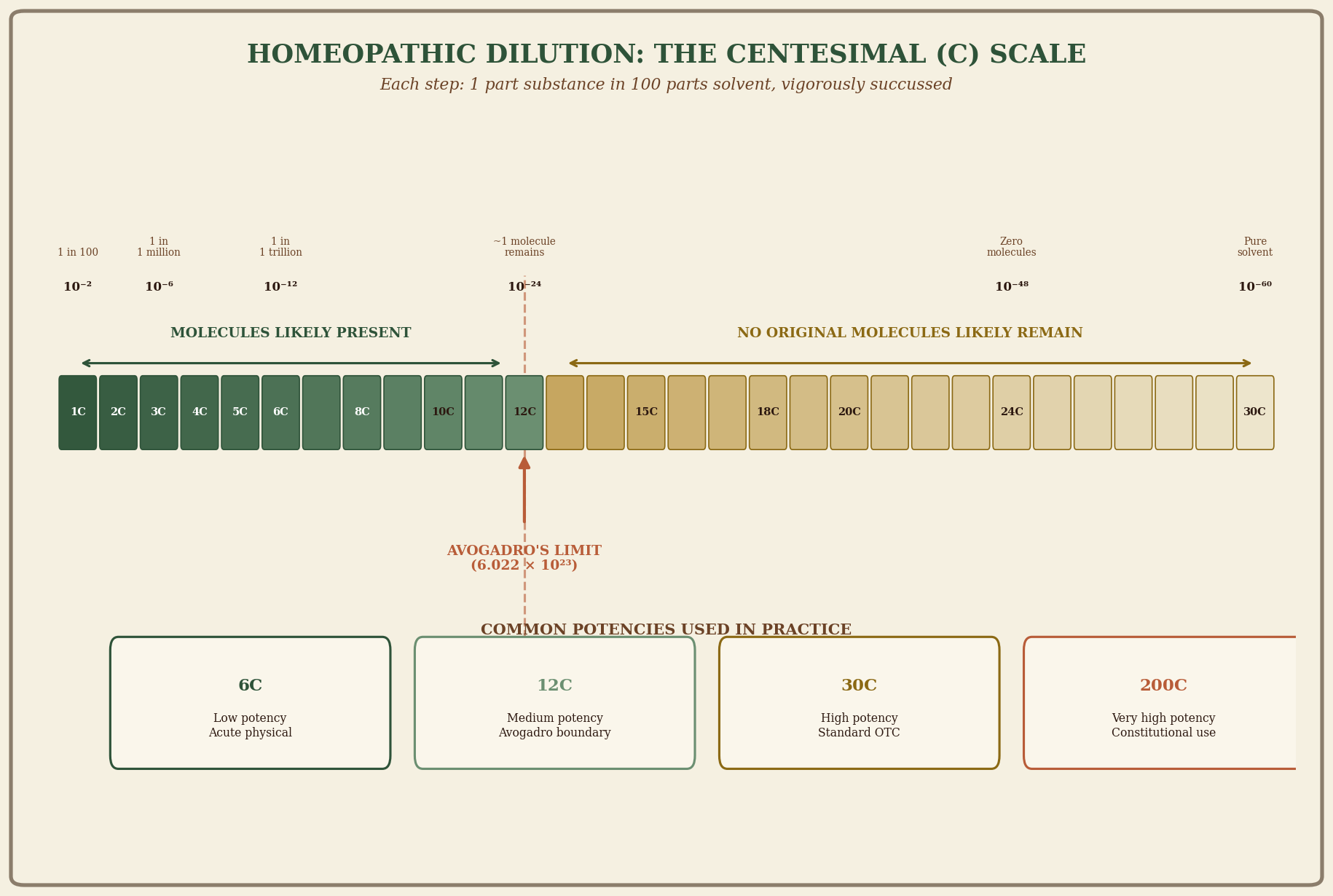
Homeopathic preparation follows a process that is either brilliantly counterintuitive or scientifically impossible, depending on whom you ask.
The mother tincture is made by macerating powdered nux-vomica seeds in ethanol for 2-4 weeks. This liquid retains measurable, pharmacologically active quantities of strychnine and brucine. It is genuinely dangerous and should only be used under professional guidance.
From this mother tincture, the remedy is prepared through serial dilution and succussion (vigorous shaking):
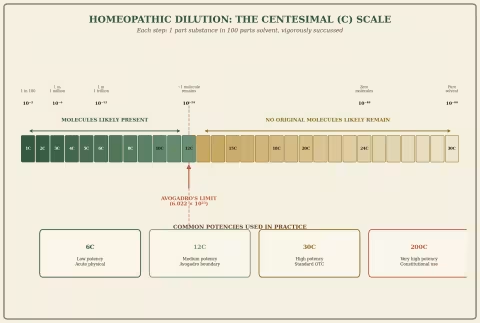
Centesimal scale (C): 1 drop of mother tincture in 99 drops of water/alcohol. Shake vigorously. That's 1C. Take 1 drop of 1C, add 99 drops, shake again. That's 2C. Repeat.
At 6C (six serial 1:100 dilutions), the concentration is 10⁻¹². Still potentially some molecules present. This is the potency often used for acute self-care.
At 12C, you hit Avogadro's number (6.022 × 10²³). Beyond this point, it becomes mathematically improbable that even a single molecule of the original strychnine remains in the solution.
At 30C — the most commonly prescribed potency and the one Boiron sells as a hangover remedy — the dilution is 10⁻⁶⁰. To put this in perspective: if you started with enough mother tincture to fill every ocean on Earth, at 30C there would likely not be a single molecule of nux vomica left.
And yet 30C is considered a "moderate" potency. Constitutional homeopaths prescribe 200C (10⁻⁴⁰⁰) and 1M/1000C (10⁻²⁰⁰⁰) routinely.
An analytical study confirmed what the math predicts: commercially available homeopathic Nux Vomica products contain no detectable strychnine or brucine (PMID: 34181973). The paper's title said it all: "Negligible Nux Vomica."
This is the central paradox of homeopathy — and nux vomica, derived from one of nature's most potent poisons yet prescribed in solutions containing none of it, is perhaps the single best illustration of that paradox.
Part V: What It's Prescribed For
The Nux Vomica Type
Classical homeopaths don't just match remedies to symptoms — they match them to people. The "Nux Vomica type" is one of the most vividly drawn character portraits in all of materia medica. James Tyler Kent, the great American homeopath, described them as "thin, spare, quick, active, nervous, and irritable."
If you've ever met a driven, coffee-fueled, short-tempered professional who works too hard, eats too fast, drinks too much, sleeps too little, and snaps at everyone before their first espresso — you've met the Nux Vomica type. Kent wrote that they are "never contented, never satisfied; disturbed by their surroundings, and they become irritable, so that they want to tear things, to scold."
Two centuries before "burnout" entered the medical vocabulary, homeopaths had a remedy for it.
The Great Digestive Remedy
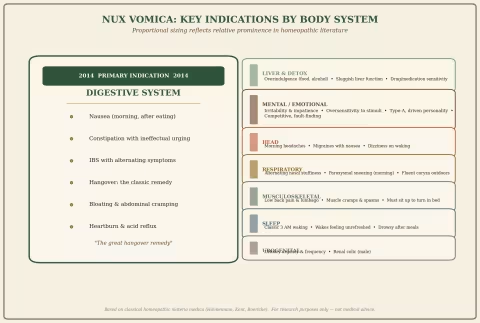
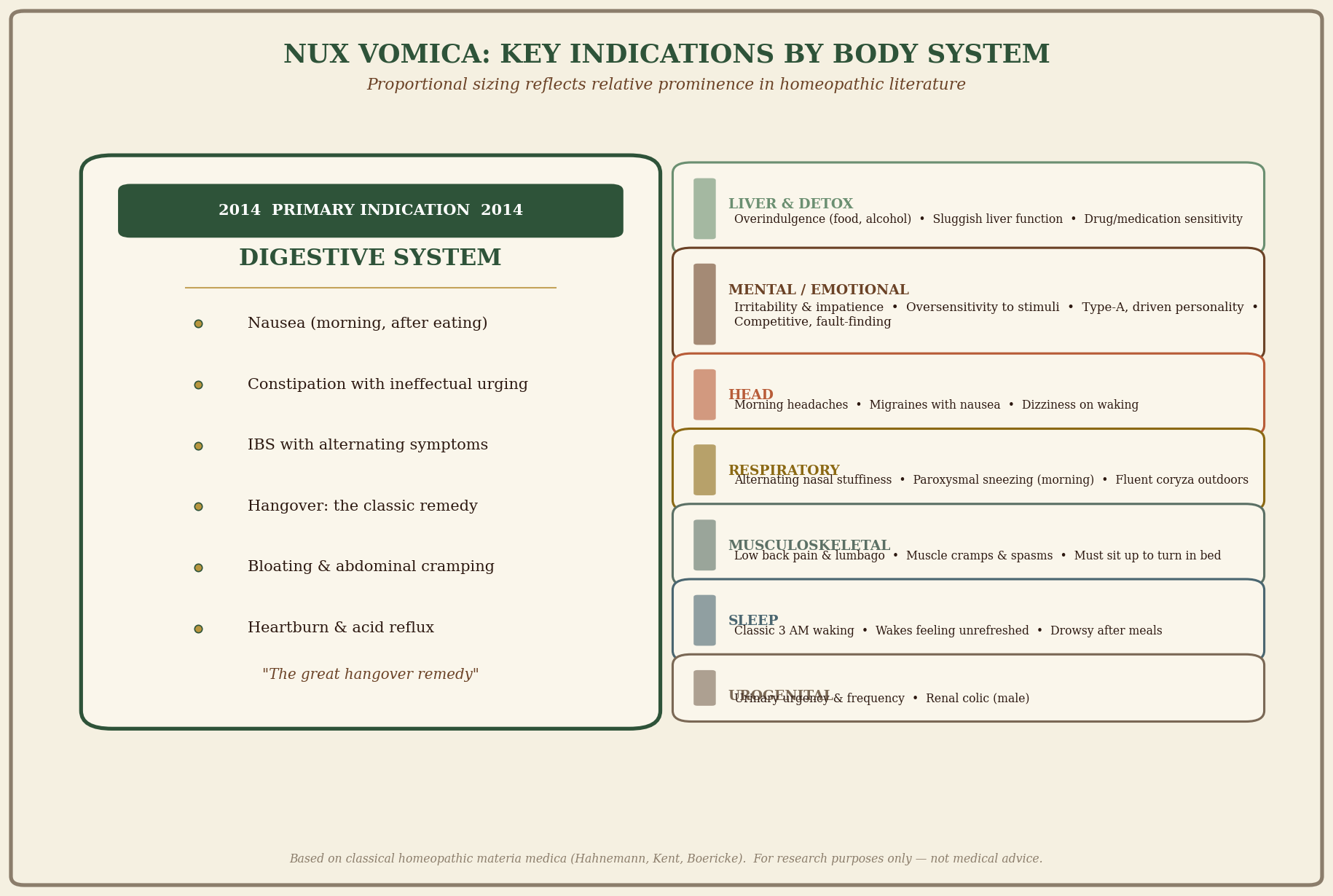
Nux vomica's primary domain is the gut. Its digestive indications read like the aftermath of every holiday dinner, bachelor party, and late-night taco run in history:
The Hangover: This is nux vomica's claim to fame. Morning-after nausea, headache, irritability, sensitivity to light and noise, sour stomach, "why did I do that" regret. The proving symptoms match the hangover symptom picture so precisely that homeopaths consider it almost self-prescribing.
Overeating: Bloating, fullness, the sensation of a stone in the stomach 1-2 hours after a meal, inability to tolerate tight clothing around the abdomen.
The Keynote Constipation: This is one of the most famous single symptoms in homeopathic literature — "constant, ineffectual urging to stool." The patient feels an urgent need to go but can only pass small, unsatisfying amounts, with the persistent feeling that more remains. This symptom alone has been the prescribing basis for millions of doses.
IBS: The alternating pattern of constipation and diarrhea, abdominal cramping, sensitivity to dietary triggers.
Beyond the Gut
| System | Key Indications |
|---|---|
| Sleep | Waking at 3-4 a.m. with racing mind; unrefreshing sleep; worse from stimulants |
| Head | Morning headaches, migraines with nausea, hangover headache |
| Liver | Detox remedy for overmedication, substance abuse, hepatitis |
| Respiratory | Alternating nasal stuffiness (blocked at night, runny by day); morning sneezing fits |
| Back | Low back pain; must sit up to turn over in bed |
| Mental | Irritability, fault-finding, oversensitivity to noise/light/odors |
| Male | Erectile dysfunction from stress or overindulgence; frequent urination |
The Modalities: What Makes It Better or Worse
Every homeopathic remedy has characteristic modalities — conditions that aggravate or ameliorate symptoms. Nux vomica's are unusually specific and consistent:
Worse: Morning (especially on waking), cold air, after eating, coffee, alcohol, tobacco, noise, light, mental exertion, tight clothing, anger
Better: A short nap (but interrupting the nap makes everything worse), evening, warmth, firm pressure, damp weather, being left alone
Part VI: The Crossing — From Europe to America to the Veterinary Clinic
Constantine Hering: The Convert
The story of nux vomica's arrival in America begins with an irony that homeopaths love to tell.
Constantine J. Hering (1800-1880) was a medical student at the University of Leipzig when his professor commissioned him to write a book refuting homeopathy. Hering dutifully began reading Hahnemann's works — and promptly became a believer. Instead of debunking homeopathy, he became its most important American champion.
Arriving in the United States around 1833, Hering founded the first homeopathic school in any country — the North American Academy of the Homeopathic Healing Art in Allentown, Pennsylvania, in 1835. His monumental 10-volume Guiding Symptoms of Our Materia Medica (1879-1891) contained some of the most detailed English-language clinical descriptions of nux vomica ever written.
Kent and the Constitutional Approach
James Tyler Kent (1849-1916) transformed nux vomica prescribing. Originally an eclectic (herbal) physician in St. Louis, Kent converted to homeopathy in 1878 after his second wife Lucy was cured by a homeopathic doctor.
Kent's genius was bringing the remedy's psychological profile to life. His Lectures on Homeopathic Materia Medica painted the Nux Vomica type so vividly — the impatient, driven, oversensitive perfectionist — that practitioners could recognize it in their waiting room before the patient sat down. His Repertory of the Homeopathic Materia Medica (1897) systematized the vast symptom data into a clinical reference tool still in use today.
Kent was the only homeopath who contributed major works to all three branches of homeopathic knowledge: philosophy, materia medica, and repertory.
Boericke: The Pocket Reference
William Boericke (1849-1929), born in Bohemia and educated in Philadelphia, created what became the most widely used homeopathic reference in the world: the Pocket Manual of Homeopathic Materia Medica (first edition 1901, definitive 9th edition 1927). His concise nux vomica entry — running just a few pages — distilled two centuries of clinical experience into a format any practitioner could use at the bedside.
Boericke was also co-owner of Boericke & Tafel, the premier homeopathic pharmaceutical firm, giving him unique insight into both the clinical and manufacturing sides of the remedy.
The Animal Kingdom
Nux vomica's journey into veterinary medicine came later but proved equally enduring.
Johann Joseph Wilhelm Lux (1773-1849) first applied homeopathy to animals as early as 1815, but formal veterinary homeopathy didn't coalesce until the 20th century. The pivotal figure was George MacLeod (1912-1995), a Glasgow-trained veterinarian who used homeopathic medicines exclusively in his practice and authored definitive texts on treating cattle, horses, and dogs homeopathically.
In 1982, MacLeod co-founded the British Association of Homeopathic Veterinary Surgeons (BAHVS) with Christopher Day (1945-2023), who served as Veterinary Dean of the Faculty of Homeopathy for 28 years. In 1987, the first veterinary homeopathic qualification in the world — the VetMFHom — was granted.
Today, nux vomica is one of the most commonly prescribed veterinary homeopathic remedies:
| Animal | Key Uses |
|---|---|
| Dogs | Dietary indiscretion (garbage eating), car sickness, irritable behavior, bloating |
| Cats | Vomiting (hairballs, diet changes), constipation, "cross" irritable temperament |
| Horses | Colic from overfeeding, flatulence, chronic digestive disturbance |
| Cattle | Bloat, overfeeding, poisoning-related digestive disorders |
The veterinary Nux Vomica type mirrors the human one: the irritable, touchy animal that snaps when disturbed, has digestive disturbances from dietary excess, and is hypersensitive to environmental stimuli.
Part VII: Does It Actually Work?
The Evidence — Such As It Is
This is where things get complicated. The clinical evidence for homeopathic nux vomica exists in a strange no-man's-land between passionate clinical tradition and rigorous scientific skepticism.
What the Studies Show
Positive or Suggestive Results:
A randomized controlled trial of homeopathic treatment for acute encephalitis syndrome in children (n=612) found the homeopathy group had significantly lower rates of death or neuro-vegetative state (14.8% vs 29.8%, relative risk 0.49). Nux vomica was among the remedies used, though not the most frequent. (PMID: 29871023)
A Cochrane review of homeopathy for IBS (2019) included a study testing asafoetida plus nux vomica for IBS with constipation. The treatment group showed 68% improvement vs 52% in placebo — a suggestive but statistically non-significant difference. The Cochrane authors rated the evidence as "very low certainty." (PMID: 31483486)
An animal study found that both nux vomica mother tincture and the 30C potency (beyond the molecular limit) reduced voluntary ethanol intake in rats, with NMR spectroscopy suggesting altered solution structure in the 30C preparation. (PMID: 11327524)
Pilot studies of individualized homeopathic treatment for IBS (nux vomica being the most frequently prescribed remedy) have reported 63% major improvement rates. (PMID: 33711816)
Clinical programs for post-acute withdrawal syndrome (PAWS) documented that patients using nux vomica and other homeopathic remedies completed six-month treatment programs at nearly twice the rate of those who did not.
The Skeptics' Case:
The landmark Shang et al. meta-analysis (2005) in The Lancet compared 110 homeopathic trials with 110 matched conventional medicine trials and concluded: "The clinical effects of homoeopathy are placebo effects." An accompanying editorial was titled "The End of Homeopathy." (PMID: 16125589)
However, this paper has been fiercely contested. The final conclusion rested on just 8 of the original 110 trials — a 93% exclusion rate. The identities of these 8 trials were not disclosed in the original publication. A reanalysis by Ludtke and Rutten (2008) demonstrated that changing just one of the selected trials reverses the conclusion entirely. (PMID: 19371564)
The Australian NHMRC (2015) concluded there is "no reliable evidence" that homeopathy is effective for any condition — a report itself later criticized for excluding positive studies below arbitrary sample size thresholds.
The Honest Assessment
| Evidence Type | Available? | Quality |
|---|---|---|
| Systematic reviews / meta-analyses | Yes | Very low certainty; controversial methodology |
| Randomized controlled trials | Yes (several) | Small samples; mostly open-label; positive but limited |
| Animal studies | Yes | Some intriguing results (ethanol intake reduction) |
| Case series / case reports | Abundant | Published in homeopathic journals |
| Traditional use / expert opinion | Extensive (220+ years) | Valuable for hypothesis generation |
The fundamental problem remains: at 30C, there are no molecules. No plausible pharmacological mechanism has been established. The "water memory" hypothesis proposed by Jacques Benveniste in a controversial 1988 Nature paper has not been accepted by mainstream science.
And yet, millions of people reach for Nux Vomica 30C after a rough night out and swear it works. Whether that represents a genuine effect, a powerful placebo response, regression to the mean, or the therapeutic value of the homeopathic consultation itself — that question, after 220 years, remains genuinely unresolved.
Part VIII: Strychnine in the Spotlight
Agatha Christie's Debut
When Agatha Christie sat down to write her first novel in 1920, she chose strychnine as the murder weapon. The Mysterious Affair at Styles introduced both Hercule Poirot and Christie's trademark pharmaceutical precision — she had worked as a wartime nurse and hospital pharmacist, and she knew her poisons. The novel's plot hinges on the distinctive symptoms of strychnine poisoning: the arching back, the locked jaw, the sardonic grin.
Christie would go on to use poison in nearly half of her 85 mystery novels. Strychnine had launched her career.
Arthur Conan Doyle also featured it — in The Sign of Four (1890), Dr. Watson identifies strychnine poisoning from the victim's risus sardonicus. In crime fiction, strychnine ranks third behind arsenic and cyanide as the poison of choice.
The 1904 Olympic Marathon
Perhaps the most bizarre episode in nux vomica's cultural history occurred at the 1904 Summer Olympics in St. Louis. During the marathon — run in 90°F heat on dusty roads — American runner Thomas Hicks began to falter. His handlers administered a dose of strychnine sulfate (1/60 of a grain, approximately 1.1 mg) mixed with brandy and raw egg whites.
Hicks revived and continued running. As he flagged again, he received a second dose. In the final miles, he was hallucinating — believing the finish line was 20 miles away — and had to be physically supported across it. He collapsed immediately afterward and was treated by four physicians.
He won the gold medal. There were no drug testing protocols in 1904.
Strychnine was, at the time, a legal and popular stimulant — medical students used it as a study aid, and it was reportedly among Adolf Hitler's daily tonics. It wasn't banned from athletic competition until the International Olympic Committee began drug testing in the late 1960s.
Part IX: Nux Vomica Today
The Hangover Remedy Goes Mainstream
Walk into any Whole Foods, natural pharmacy, or browse Amazon's health section, and you'll find Boiron's Nux Vomica 30C pellets. The packaging promises relief from "hangover, upset stomach, nausea, and overindulgence of food or drink." It's one of the best-selling homeopathic products in the world.
The irony is delicious: a remedy derived from one of nature's deadliest poisons, diluted until not a single molecule remains, marketed in cheerful packaging for the consequences of too many margaritas. Samuel Hahnemann, who was famously austere and disapproved of overindulgence in any form, might have appreciated the cosmic joke.
The Modern "Nux Vomica Type"
Perhaps the most enduring legacy of nux vomica isn't pharmacological — it's psychological. The Nux Vomica constitution reads like a clinical description of modern burnout culture: the driven professional, chronically stressed, overstimulated, running on caffeine, eating too fast, sleeping too little, irritable with everyone, and paying for it all with a perpetually unhappy stomach.
Two centuries before the wellness industry coined "adrenal fatigue" and "sympathetic dominance," Hahnemann and his provers had mapped the same territory — and given it a name.
Regulatory Limbo
Nux vomica occupies a peculiar regulatory position worldwide:
- USA: Marketed without FDA approval; the FDA has flagged it as a potential safety concern (due to strychnine) particularly in children's products
- EU: Available under simplified registration; no specific therapeutic claims allowed on labeling
- India: Fully integrated into the nationally recognized homeopathic medical system
- Switzerland: Covered by health insurance alongside conventional medicine (since 2017, by popular vote)
- Australia: The NHMRC has concluded homeopathy is not effective for any condition
A Note on Safety
- Raw nux vomica seeds are deadly. Do not handle, chew, or ingest them.
- Mother tincture and very low potencies (1X-3X) contain pharmacologically active strychnine and should only be used under professional guidance.
- Potencies of 6C and above contain no detectable strychnine and are considered physically safe.
- The FDA does not evaluate homeopathic products for safety or effectiveness.
- If you're considering nux vomica for a health condition, discuss it with a qualified healthcare provider — whether homeopathic or conventional.
The Final Paradox
Nux vomica is, in many ways, homeopathy's signature remedy — and its signature contradiction.
It is a poison that became a medicine. A tree that kills at material doses but supposedly heals at doses where nothing remains. A remedy discovered through a process (proving on healthy volunteers) that prefigured modern clinical pharmacology, yet prescribed at dilutions that defy modern pharmacology's most basic principles.
It has been documented by Hahnemann, expanded by Hering, systematized by Kent, standardized by Boericke, and sold by Boiron. It has been used on humans, dogs, cats, horses, cattle, and at least one species of toad. It has featured in a Lancet meta-analysis, an Agatha Christie novel, an Olympic scandal, and approximately ten million Saturday morning hangovers.
After 220 years, neither its passionate advocates nor its rigorous critics have managed to fully explain it. The advocates say: it works, we see it daily, the clinical tradition is vast and consistent. The critics say: it's water, there's nothing in it, and any perceived effect is placebo.
Both sides are probably right about something.
And somewhere in the tropical forests of India, Strychnos nux-vomica continues to produce its small, hard, devastatingly bitter seeds — indifferent to the debate.
Key References
- Hahnemann S. Fragmenta de Viribus Medicamentorum Positivis. Leipzig: J.A. Barth; 1805.
- Hahnemann S. Materia Medica Pura. Dresden: Arnold; 1811-1821.
- Kent JT. Repertory of the Homeopathic Materia Medica. 1897.
- Boericke W. Pocket Manual of Homeopathic Materia Medica. 9th ed. 1927.
- Clarke JH. A Dictionary of Practical Materia Medica. 3 vols. 1902.
- Hering C. The Guiding Symptoms of Our Materia Medica. 10 vols. 1879-1891.
- Mitra SK, et al. Effect of Shodhana on Kupeelu. Ayu. 2011;32(3):402-7. PMID: 22529660
- Tournier A, et al. Negligible Nux Vomica. Toxicol Lett. 2021;349:15-20. PMID: 34181973
- Sukul NC, et al. Nux-vomica extract reduces ethanol intake in rats. J Altern Complement Med. 2001;7(2):187-93. PMID: 11327524
- Shang A, et al. Are the clinical effects of homoeopathy placebo effects? Lancet. 2005;366:726-32. PMID: 16125589
- Ludtke R, Rutten AL. Conclusions on effectiveness depend on analyzed trials. J Clin Epidemiol. 2008;61(12):1197-204. PMID: 19371564
- Oberai P, et al. Homeopathy for acute encephalitis in children. Homeopathy. 2018;107(3):161-71. PMID: 29871023
- Peckham EJ, et al. Homeopathy for IBS. Cochrane Database Syst Rev. 2019;9:CD009710. PMID: 31483486
- Gupta J, et al. Individualized homeopathic treatment for IBS. Homeopathy. 2021;110(3):174-81. PMID: 33711816
- Usmanova N, et al. Pharmacological characterisation at glycine receptors. Br J Pharmacol. 2006;148(4):571-81. PMID: 16687139
This article is for research and educational purposes. It does not constitute medical advice. Homeopathic remedies are not FDA-approved drugs. Always consult qualified healthcare providers before implementing treatment changes.